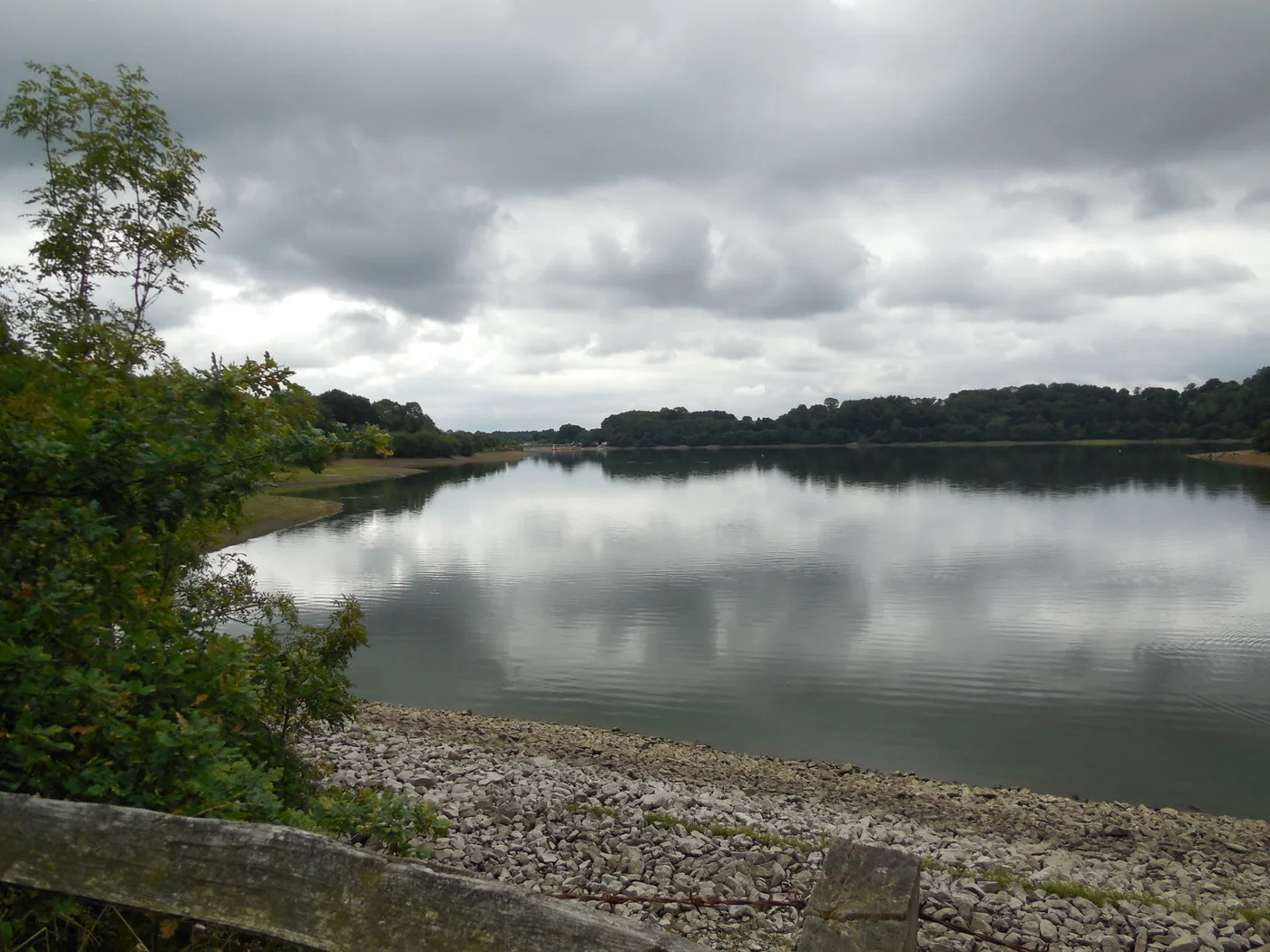

Ardingly Reservoir ended July at 61.22% of capacity against an 82% average, after the Ouse catchment recorded 0.4mm of rain. What the hosepipe ban actually bans.
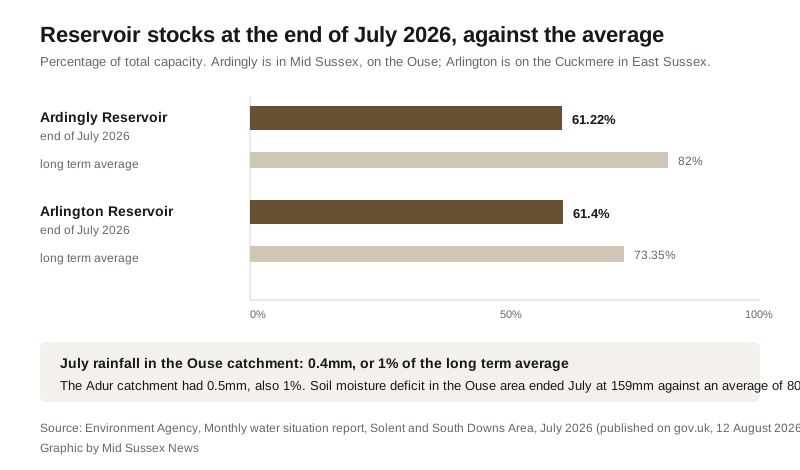
Ardingly Reservoir ended July at 61.22% of its total capacity, against a long term average of 82% for the time of year, after the driest July on record in the catchment it sits in. The figures come from the Environment Agency’s monthly water situation report for the Solent and South Downs area, published on gov.uk on 12 August. (Environment Agency, Solent and South Downs, July 2026)
Arlington Reservoir on the Cuckmere, the other reservoir the agency reports for this area, was at 61.4% against an average of 73.35%. Both are below average, but Ardingly is the one that sits inside Mid Sussex, and it is the one running furthest below where it should be.
0.4mm of rain in a month
The Ouse hydrological area, which covers most of Mid Sussex, recorded 0.4mm of rain during the whole of July, 1% of the long term average. The neighbouring Adur area recorded 0.5mm, also 1%. Across the Solent and South Downs area as a whole, July was the lowest monthly rainfall total on record in a series that goes back to 1871, and for the Ouse area the March to July period was the fifth driest ever recorded. (Environment Agency)
There were five days in the whole month when a gauge anywhere in the area recorded 1mm or more, and the wettest single day anywhere in Solent and South Downs delivered 1.9mm.
The ground is holding nothing back. Soil moisture deficit in the Ouse area ended July at 159mm, against a long term average of 80mm for the end of the month, and the agency records no groundwater recharge at all across the area in July.
The Ouse looks fine because the reservoir is topping it up
This is the detail worth sitting with. The Environment Agency classes flows on the River Ouse at Goldbridge as normal for July, which sounds reassuring. The report then explains why: “at this site the augmentation and compensation water releases from the Ardingly reservoir impact flows”. In other words, the river is being held at normal by water let out of the reservoir that is itself more than 20 percentage points below average.
The River Adur at Sakeham, which has no such support, was classed below normal. Rivers in clay catchments elsewhere in the area, including the Arun at Alfoldean, were classed exceptionally low, and the Arun recorded its second lowest July flow since records began there in 1970.
Groundwater is the one comparatively healthy part of the picture, thanks to a wet winter. Most sites the agency monitors ended July at normal levels, but Chilgrove in the West Sussex Chalk was below normal and Beeding Hill, also West Sussex Chalk, was notably low. Across the area the number of abstraction licence restrictions in force rose from 12 at the start of July to 20 by the end of it.
The hosepipe ban is a legal notice, not a request
South East Water’s temporary use ban has applied throughout its Sussex and West supply region since 00.01 on Saturday 25 July. Its Kent customers went into restrictions three weeks earlier, from 3 July. The company says the trigger in Sussex was the Cuckmere dropping to the point where it had to stop taking water from the river, which pulled Arlington Reservoir down, combined with the area receiving 55% of its average rainfall since March. (South East Water)
Douglas Whitfield, water supply director at South East Water, said this is the fourth ban in five years for the company’s Sussex customers, and that the priority is “to restore long-term resilience to break this cycle”. (South East Water, 20 July 2026)
What it means for you
Eleven specific uses are prohibited, and the notice is made under statute. The ban is served under sections 76 and 76A to C of the Water Industry Act 1991 and covers watering a garden, watering plants on domestic premises, cleaning a private car or trailer, cleaning a private leisure boat, filling or maintaining a domestic swimming or paddling pool, drawing water for hot tubs and other domestic recreational use, filling or maintaining a domestic pond, filling or maintaining an ornamental fountain, cleaning the walls or windows of a home, cleaning paths or patios, and cleaning other artificial outdoor surfaces. (South East Water statutory notice)
A “hosepipe” is broader than you think. The notice defines it as anything designed, adapted or used to serve the same purpose, which expressly includes garden sprinklers, irrigation systems connected to the mains and anything attached to them, such as a pressure washer.
Breaking it is a criminal offence. Anyone who contravenes the prohibitions is guilty of an offence and liable on summary conviction to a fine of up to £1,000.
There are automatic exemptions, and you do not have to apply for them. Customers on South East Water’s Priority Services Register are exempted automatically and are notified directly. Use that is unavoidable for health and safety, or where the welfare of animals including fish is paramount, is not restricted. Nor is “a hosepipe that is connected to a water butt or other recycled water storage system”, which is the practical answer for a garden this summer. The company says it may question a claimed exemption if it receives reports of hosepipe use.
Gardeners and allotment holders have more room than the headline suggests. The notice specifically permits drip or trickle irrigation systems fitted with a pressure reducing valve and a timer, which are not hand held and put water onto or under the soil without spray or run off. It permits watering a new lawn at a domestic property for four weeks after the turf was laid, if the turf went down before the ban began and the job cannot reasonably be done with a watering can, provided it is outside the peak hours of 8am to 10am and 5pm to 9pm. It permits watering trees, whips, saplings and hedging planted in the last planting year, and watering food crops at domestic premises or private allotments, in both cases where a watering can is not a reasonable alternative. Sports pitches may be watered on the playing area only, again outside those peak hours. (South East Water statutory notice)
Check who supplies you before you assume. The ban applies to anyone receiving a supply from South East Water in the Sussex and West region, including customers served through other retailers. If you are not sure whether your home is on South East Water, the company’s own postcode checker will tell you.
Rain will not fix this quickly. With soil moisture deficits at roughly twice their normal level and no recharge recorded in July, the first rain to arrive goes into the ground rather than into rivers and reservoirs. The Environment Agency publishes these figures monthly, and we will report the August numbers for Ardingly when they land.
Have your say