
The inspector has pushed the Mid Sussex housing requirement to 24,071 homes and added 35 sites. The consultation on all of it closes at 23:59 on 7 September 2026.
Mid Sussex District Council is running a six-week public consultation that closes at 23:59 on Monday 7 September 2026 on changes to its new Local Plan. The changes are substantial. The housing requirement has gone up from 19,620 homes to 24,071, and 35 additional sites have been added, together carrying about 4,040 homes.
This is the last formal chance to comment before the plan goes back to the inspector. Comments can only be made on the modifications themselves; anything about other parts of the plan will not be accepted.
What is being consulted on, and how to comment
The Mid Sussex District Plan 2021 to 2039 was submitted for examination on 8 July 2024. Hearings were held in February and March 2026 before the inspector, Jonathan Bore MRTPI, who has since recommended a set of Main Modifications required to make the plan, in the formal language, legally compliant and sound.
The council is running the consultation on the inspector’s behalf. It opened on 27 July 2026 and closes at 23:59 on Monday 7 September 2026. Late comments will not be accepted. You can respond:
- online through the council’s Main Modifications consultation page;
- by email to policyconsultation@midsussex.gov.uk;
- or by post to Planning Policy, Mid Sussex District Plan, Mid Sussex District Council, Oaklands, Oaklands Road, Haywards Heath, West Sussex, RH16 1SS.
Everything received goes to the inspector. The council’s own timetable says he will review the responses in September and October, and that further examination hearings are provisionally pencilled in for the week beginning 2 November 2026 if they turn out to be needed.
The number that changed: 19,620 to 24,071
The plan as submitted was built on a local housing need of 19,620 homes over the plan period, an average of 1,090 a year. At the hearings the inspector told the council that was not enough and asked it to plan for a range of 1,200 to 1,300 homes a year.
The schedule of main modifications now sets the requirement out like this:
| Component | Homes |
|---|---|
| Mid Sussex local housing need | 19,243 |
| Unmet need from Crawley | 3,753 |
| Unmet need from Brighton and Hove | 1,075 |
| Total housing requirement | 24,071 |
| Headroom, for resilience if delivery slips | 766 |
| Requirement plus headroom | 24,837 |
| Total planned supply | 24,949 |
That works out at an average of 1,267 homes a year across the plan period, against 1,090 in the submitted version.
The important detail is where the extra comes from. Mid Sussex’s own assessed need has actually gone down slightly, from 19,620 to 19,243, because of how the standard method treats past years. The entire increase is 4,828 homes of other districts’ unmet need: 3,753 from Crawley, which is hemmed in and cannot build what it needs inside its own boundary, and 1,075 from Brighton and Hove, which is between the sea and the South Downs National Park. Mid Sussex is the district next door with land in it.
Where the 35 new sites go
The council published its long list of additional sites on 15 May 2026, ran a two-week fact check with the site promoters, completed in-combination testing on 17 July, and has now put the resulting allocations out for comment as policies MM60 to MM94.
Adding up the council’s own figure for each of the 35 sites gives about 4,040 homes. Grouped by the settlement each policy names:
The shape of that chart is the story. The three towns take 1,117 homes between them and the villages take 2,923. Haywards Heath, the district’s administrative centre, takes 152 across four small sites, the largest of which is 80 homes at North Colwell Farm on Lewes Road. Pease Pottage, a village on the M23 with a few hundred houses, takes 939.
The biggest of the new sites
| Site | Settlement | Homes |
|---|---|---|
| Land west and east of Malthouse Lane | Burgess Hill | 750 |
| Land west of Woodhurst Farm, Old Brighton Road South | Pease Pottage | 700 |
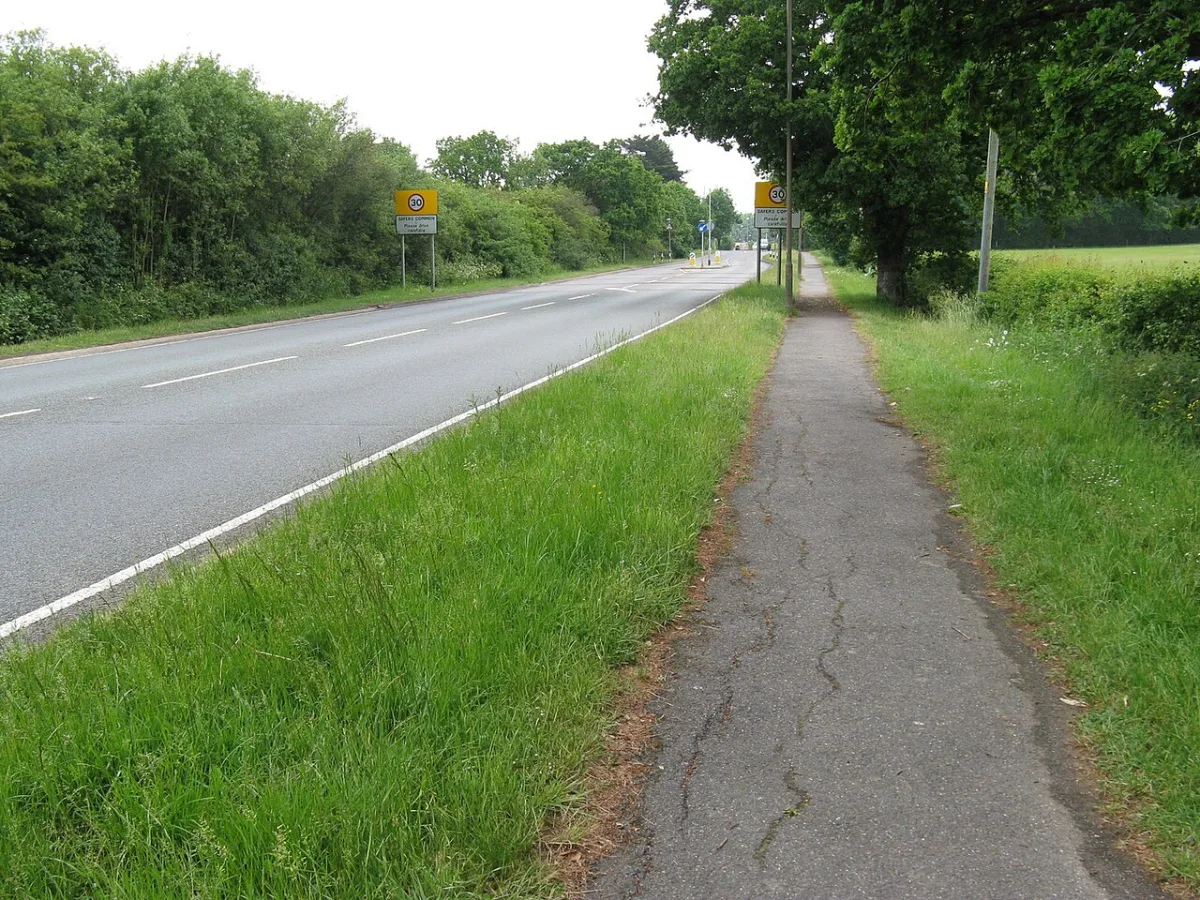
| West House Farm, Henfield Road | Sayers Common | 325 |
| Land west of Ockley Lane | Hassocks | 250 |
| Land east of London Road | Albourne | 250 |
| Land at Pease Field | Pease Pottage | 196 |
| Land north east of Hurstpierpoint | Hurstpierpoint | 150 |
| Land north of Willow Way and Talbot Mead | Hurstpierpoint | 150 |
| Land rear of The Martins, south of Hophurst Lane | Crawley Down | 150 |
| Land west of Truggers | Handcross | 105 |
| 1-5 Queens Walk and 22-26 London Road | East Grinstead | 100 |
The Malthouse Lane site is the one to watch. It is 54 hectares across two parcels west and east of the lane, and although the policy files it under Burgess Hill it sits in the Hurstpierpoint and Sayers Common and Hassocks parishes. Its main access would be a new roundabout on Jane Murray Way, with a secondary access off Danworth Lane reached through the separate Land West of Burgess Hill allocation. It comes with a neighbourhood centre, a nursery, sports pitches and a requirement to preserve the vistas to the chapel at Hurstpierpoint College.
What was already in the plan
The additional sites sit on top of the three sustainable communities the plan already proposed, which between them carry 4,700 homes:
- Crabbet Park, Copthorne: 1,850 homes.
- Land south of Reeds Lane, Sayers Common: 1,500 homes.
- Land to the west of Burgess Hill and north of Hurstpierpoint: 1,350 homes.
Add the new allocations and Sayers Common, a village on the A23 with a few hundred homes today, is now looking at around 1,975. That is the single largest proportional change anywhere in the district, and it is why the council has published a separate Sayers Common Infrastructure Delivery Plan and a holistic movement strategy for the village alongside the modifications.
The Northern Arc, already being built
Separately from the plan review, the Burgess Hill Northern Arc is under construction on land north and north west of the town, between Bedelands Nature Reserve and the Goddard’s Green treatment works. Outline permission was granted in 2019 for more than 3,000 homes, with the scheme planned to deliver up to 3,500 along with roads, schools, shops and open space. A phase 1c application went to the district planning committee with a recommendation for permission on 26 March 2026.
That development is already counted in the plan’s committed supply, so it is not part of the 24,071 figure being consulted on. It matters to this page for a different reason: it is the visible answer to the question of what a 750-home or 1,500-home allocation actually looks like once it is built.
Who decides what, and where to look it up
Three bodies make planning decisions in Mid Sussex, and the answer to almost every question about a site depends on which one it is.
- Mid Sussex District Council is the planning authority for most of the district and writes the Local Plan.
- The South Downs National Park Authority is the planning authority inside the park boundary, in the south of the district around Pyecombe, Poynings, Fulking and Newtimber, and it writes its own plan.
- West Sussex County Council decides minerals, waste and its own highway schemes, and is the highways consultee on everything else. Its road programme for the year is the practical consequence of a lot of these decisions.
The full evidence base for the examination, including the housing land supply note published on 30 July 2026, the July 2026 Infrastructure Delivery Plan, the Burgess Hill parking study and the transport modelling, is on the council’s examination page.
What all this does to house prices is the obvious next question. For now, the district average is £430,711 and broadly flat, with the villages already the most expensive places in Mid Sussex to buy. Our house prices page has the ward-by-ward figures.
Have your say