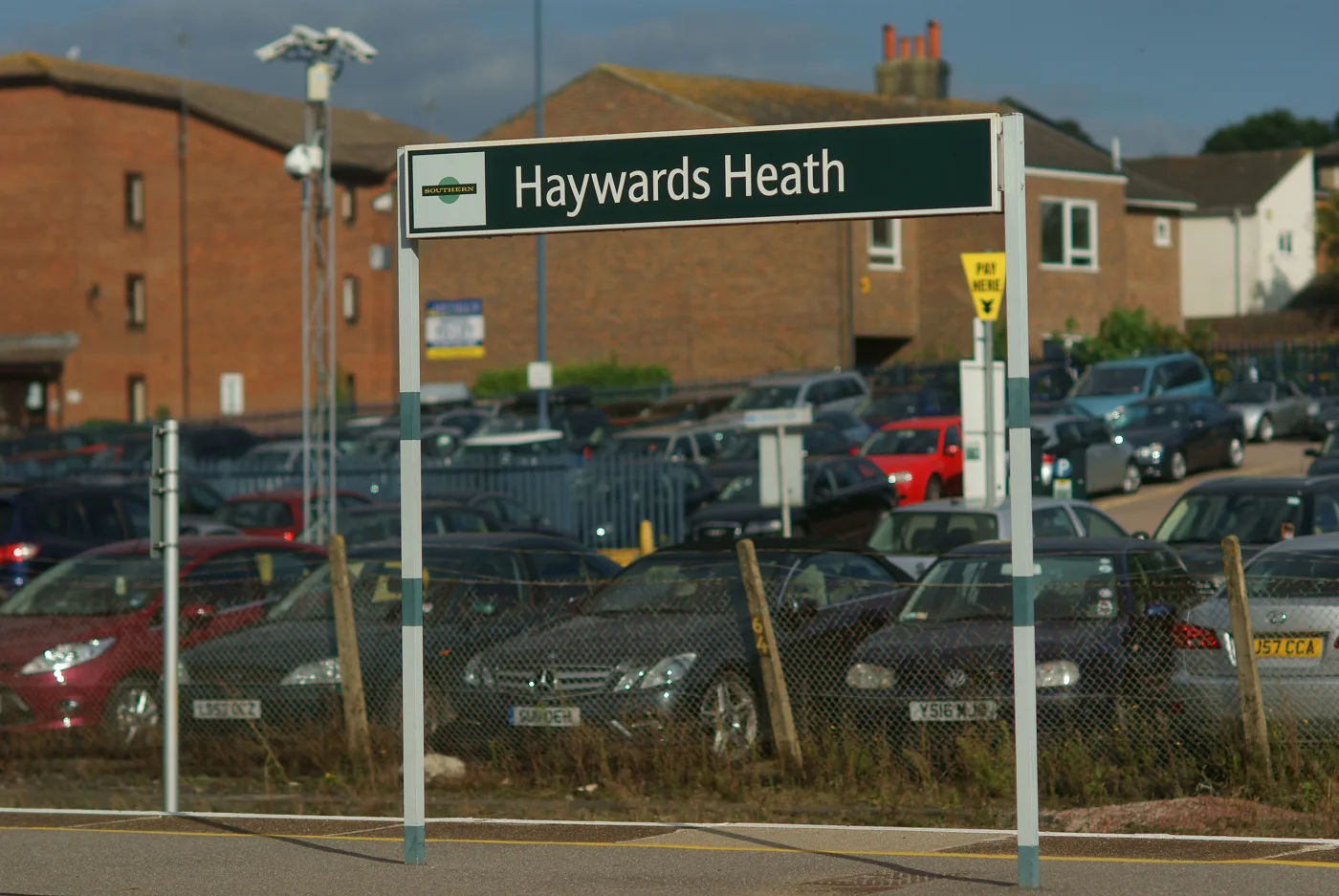

No trains between Haywards Heath and Lewes until at least 1 September. Investigators found a track fault on CCTV footage taken before the derailment.
Trains will not run between Haywards Heath and Lewes until at least Tuesday 1 September, more than a fortnight after the derailment that closed the line.
Rail accident investigators have now published what they have established so far, and one finding stands out. A track fault was already visible on CCTV footage from trains that passed the spot earlier the same afternoon, and passengers on other services had reported rough riding at that location.
The Rail Accident Investigation Branch set this out in a preliminary statement published on 19 August. It has not reached a conclusion about what caused the derailment, and says its analysis of the track and the derailment sequence is continuing.
What the investigators have established
RAIB’s statement records the following:
- Marks on the rails near the point of derailment are consistent with the wheels of the derailed rear vehicles having climbed over the rails.
- Forward and rear-facing CCTV from trains using the line on 13 August shows a track geometry irregularity existed on the immediate approach to the point of derailment, before the accident.
- There was evidence of previous track maintenance activity in the same area.
- Since the accident, RAIB has received several reports of rough riding at that location from passengers on other trains.
- The embankment there is clay sitting on alluvial deposits, both of which move as moisture levels change. There is no evidence of a significant slip before the accident, but there is evidence that some movement had previously taken place.
- The weather was hot, dry and still, with the nearest weather station recording around 27C at the time.
The data recorder from the front carriage has been downloaded. It shows the train was travelling at about 65mph where the line speed is 70mph, and that the driver braked as the train passed the point of derailment.
What happened
Train 1F34, the 14:24 London Victoria to Eastbourne service, derailed at around 15:54 on Thursday 13 August, roughly a mile north of Lewes station. It was formed of two four-carriage Class 387 units.
The rear three carriages derailed and overturned, coming to rest on their sides on the embankment. The front five did not derail. Around 150 people were on board. Thirty were injured and 20 needed hospital treatment, some with serious injuries.
The accident happened on the Down Lewes line between Cooksbridge station and Lewes Tunnel. RAIB was notified at 16:02 and its first inspectors reached the site at 19:11.
Why it is taking so long to reopen
RAIB released the site to Network Rail at 14:09 on Saturday 15 August, and its own inspectors finished work there on Monday 17 August. The recovery is the slow part.
Southern says the derailed carriages must be lifted by rail crane and moved by road to secure storage, and that engineers cannot fully assess the damage to the track and embankment until the train has gone, according to its service update. Only then can the repairs be scoped.
What RAIB will look at next
The investigation will try to establish the sequence of events and, in RAIB’s own words, will also consider:
- the exact mechanism by which the train derailed
- the status of the track at that location, and how it was inspected and maintained
- the condition of the embankment, including hot weather, nearby structures and vegetation, and how it was inspected and maintained
- the weather in the area on the day and in the weeks and months before it
- how effective any measures intended to manage the risks of running trains in hot weather were
- the condition of the train, and how the rear three carriages performed in the derailment
- the emergency response
- whether previous safety recommendations were acted on
RAIB says some of what it has published may be refined as the investigation goes on. Its work is independent of both the rail industry and the regulator, the Office of Rail and Road.
What it means for you
If you travel from Haywards Heath towards Lewes, Eastbourne or Hastings, this is the position as Southern sets it out:
- Replacement buses run between Haywards Heath and Lewes in both directions, calling at Plumpton and Cooksbridge. Southern warns that Cooksbridge cannot always be served because of the recovery work.
- There are no direct trains between London and Eastbourne or Hastings. For Eastbourne, travel via Brighton and change there. For Hastings, Southeastern to and from London Charing Cross is the faster option.
- Tickets dated up to and including Wednesday 26 August can be used on a different service two hours either side of the booked train, or refunded in full. If you bought from Southern, a ticket office will refund it now without waiting for your train to be cancelled.
- You cannot move a ticket to a different day. Southern’s rule is a refund and a fresh purchase.
- Check on the day you travel. Journey planners are being rebuilt daily, so anything they show for next week may not be right.
The Brighton Main Line itself, which is the Haywards Heath and Burgess Hill route to London Victoria and London Bridge, is running normally. We track the closures and diversions that do affect Mid Sussex on our roadworks and travel page, and the timetable to London on our trains to London page.
Sources
- Rail Accident Investigation Branch, Derailment of a passenger train at Lewes, published 19 August 2026.
- Southern, Train derailment near Lewes, read 21 August 2026.
Have your say