
Haywards Heath College reports a 94.6% A level pass rate and Sackville nearly one in four grades at A*/A. Every Mid Sussex figure, and why they do not compare.
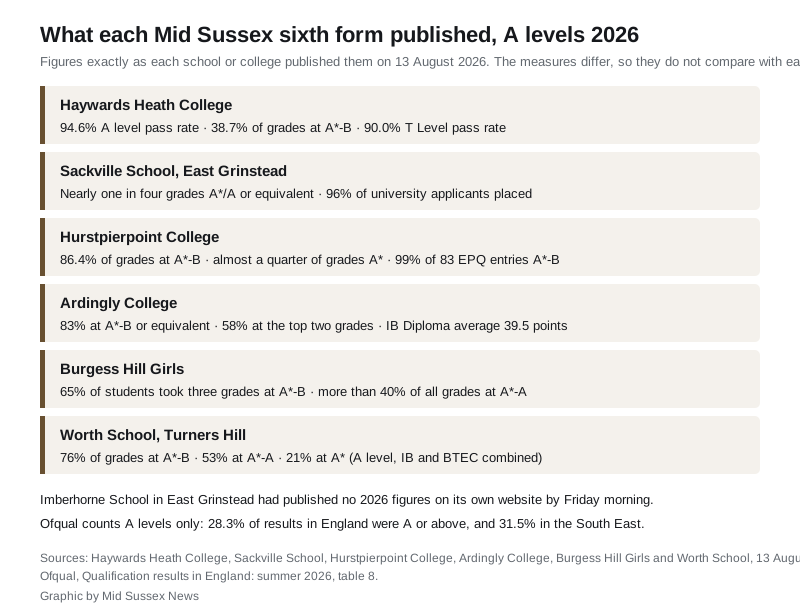
Haywards Heath College says 94.6% of its A level entries passed this summer and 38.7% of its grades were awarded at A*-B. Its T Level students returned a 90.0% pass rate. (Haywards Heath College, 13 August 2026)
Matthew Vaughan, principal of Haywards Heath College, said: “A greater proportion of our students are achieving high grades than ever before, and this makes a massive difference in improving their opportunities.” Students began arriving from 8.30am on Thursday to collect envelopes, with destinations this year including medicine at the University of Bristol. (Haywards Heath College, 13 August 2026)
Six Mid Sussex sixth forms have now published figures for the 2026 A level year. Below is what each one actually said, in its own words and its own measure, followed by the national numbers those measures can and cannot be set against.
The state sector
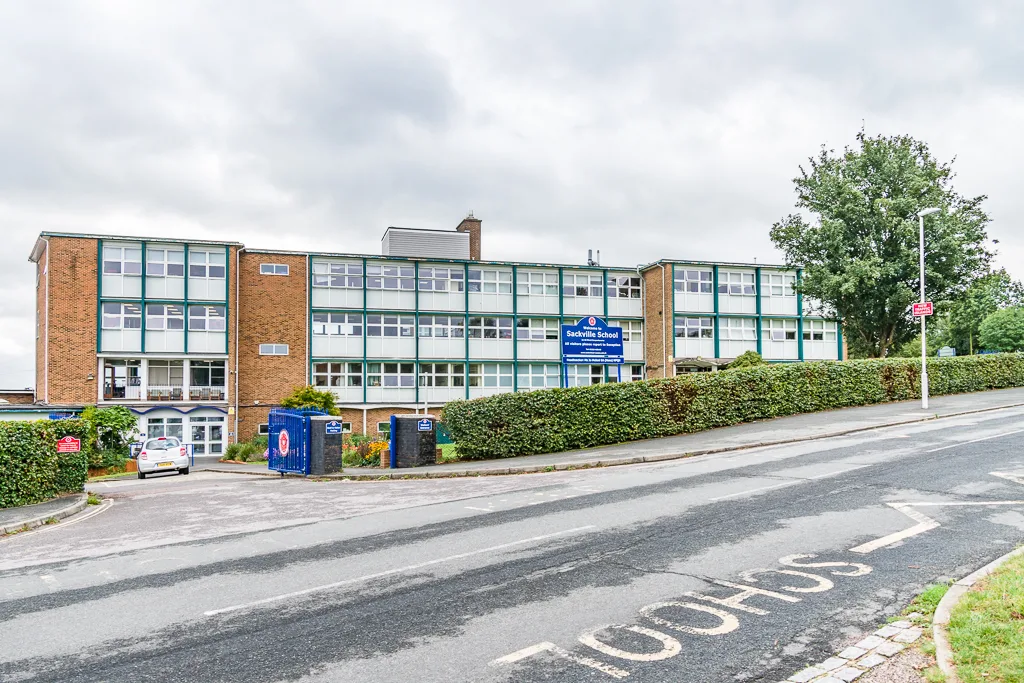
Sackville School in East Grinstead reported that nearly one in four grades were A*/A or equivalent, and that 96% of students who applied to university were successful when offers were revealed on Thursday morning. Every student who took a vocational qualification gained at least a pass, with 40% awarded a Distinction* or Distinction, and the school said 10 subjects placed in the top 25% nationally for progress. (Sackville School)
Imberhorne School, the other East Grinstead sixth form, had published no 2026 figures on its own website by Friday morning. Its exam results page still carries performance table data for 2021 to 2022. (Imberhorne School)
Two of the district’s best-known state schools are absent from any A level table by definition. Warden Park Secondary Academy in Cuckfield and Oathall Community College in Haywards Heath are both registered as 11 to 16 schools, so their students sit GCSEs and move on elsewhere at 16. (Get Information about Schools, Warden Park, Oathall)
The independent schools
Hurstpierpoint College awarded 86.4% of its grades at A*-B, with almost a quarter of all grades at A*. Every pupil taking Art achieved an A* or A, and of the 83 pupils who completed the Extended Project Qualification, 99% were graded A*-B. Dominic Mott, head of college, called it “another outstanding set of results from an incredibly talented, hard working year group”. (Hurstpierpoint College)
Ardingly College published a combined figure across A level, International Baccalaureate and BTEC: 25% at the top grade, 58% at the top two grades and 83% at A*-B, IB 7 to 5 or BTEC Distinction* to Distinction. Its IB Diploma cohort averaged 39.5 points, with 19 students scoring 40 or more, and 24 students took three or more A levels at A*-A. The college said all its medicine, veterinary and Oxbridge offer holders met their conditions. (Ardingly College, 13 August 2026)
Burgess Hill Girls said 65% of its students achieved three grades at A*-B and more than 40% of all grades were at A*-A, with 100% A*-A across Art, Textiles and Product Design and every EPQ candidate awarded an A* or A. Heather Cavanagh, head of Burgess Hill Girls, said the results reflected “not only academic excellence, but also the perseverance, ambition, and commitment our students have shown”. Named destinations include King’s College London, Durham, UCL, Nottingham, Reading, Kingston School of Art and the University of the Arts London. (Burgess Hill Girls, 13 August 2026)
Worth School at Turners Hill reported 21% of grades at A*, 53% at A*-A, 76% at A*-B and 88% at A*-C across A level, IB and BTEC combined, with 85% of Business BTEC pupils at Distinction or Distinction*. Destinations named by the school include Imperial College London for physics, Durham for economics and mathematics, King’s College London for mathematics and philosophy and Exeter for modern languages. (Worth School, 13 August 2026)
Why none of those numbers compare with each other
This is the part the round-ups usually skip. Ofqual, the exams regulator, publishes only two headline measures, and they cover A levels alone: the percentage of results at grade A and above, and at grade C and above. Nationally, 28.3% of A level results in England were A or above this summer, up from 28.2% last year, and 78.1% were C or above, up from 77.7%. In the South East the figures were 31.5% and 79.5%, on 166,940 results. (Ofqual, Qualification results in England: summer 2026)
Schools, meanwhile, mostly publish A*-B, and often add “or equivalent”, meaning BTEC and other vocational grades are folded into the same percentage. There is no national A*-B figure to hold those against. A school’s A*-B can only fairly be compared with its own previous years. That applies to Hurstpierpoint’s 86.4%, Worth’s 76%, Haywards Heath College’s 38.7% and Burgess Hill Girls’ 65%, which is a share of students rather than of grades in the first place.
Centre type matters as much as postcode. Ofqual’s own table shows independent schools awarded 48.6% of their A level results at A or above this year, against 25.4% across all state-funded centres, 23.5% at academies, 25.6% at sixth form colleges and 12.8% at further education establishments. Ofqual notes that schools and colleges self-report which of those categories they fall into. A comprehensive, a college and a fee-charging boarding school are not teaching the same intake, and comparing their headline percentages tells you more about admissions than about teaching. (Ofqual, table 9)
One more caveat worth knowing before anyone quotes a district league table. Ofqual’s interactive map of results by local authority area assigns every grade “based on the postcodes recorded for exam centres in the National Centre Number (NCN) register”, not on where the student lives. A district containing large independent or selective schools therefore ranks on the results of children who may travel in from three counties. (Ofqual Analytics)
What it means for you
If a grade looks wrong, the clock is already running. The priority review of marking, for students whose university place depends on the outcome, closes on 20 August 2026 and covers A levels, Level 3 vocational qualifications and T Levels only. Awarding bodies must complete it within 15 calendar days. The standard review of marking and the clerical re-check both close on 24 September 2026, with 20 and 10 calendar day turnarounds. (JCQ, post-results services)
You cannot request it yourself, and the grade can go down. Requests go through the school or college exams officer, and the centre must obtain the student’s written consent after results are published, precisely because marks and grades “could go down as well as up”. Anyone who left Year 13 in the summer still goes back to their old centre to do this. (JCQ)
Clearing is open. Students who missed their offers, changed their minds or applied late can find a place through UCAS Clearing, which runs into October. (UCAS)
GCSE results follow on Thursday 20 August, the same day the priority review deadline falls. Warden Park is handing them out in the Studio between 9am and 10.30am, and Oathall in the hall between 10am and 11am, with uncollected results posted the same day. Oathall also requires a signed results form in advance if a parent is collecting on a student’s behalf. (Warden Park, Oathall Community College) If you are getting a teenager across the district that morning, our Mid Sussex trains and travel page sets out the Haywards Heath, Burgess Hill and East Grinstead services and how they connect.
We will report Mid Sussex GCSE results from the schools’ own published figures next week, on the same basis: their numbers, their measures, and the national comparison stated plainly.
Have your say